
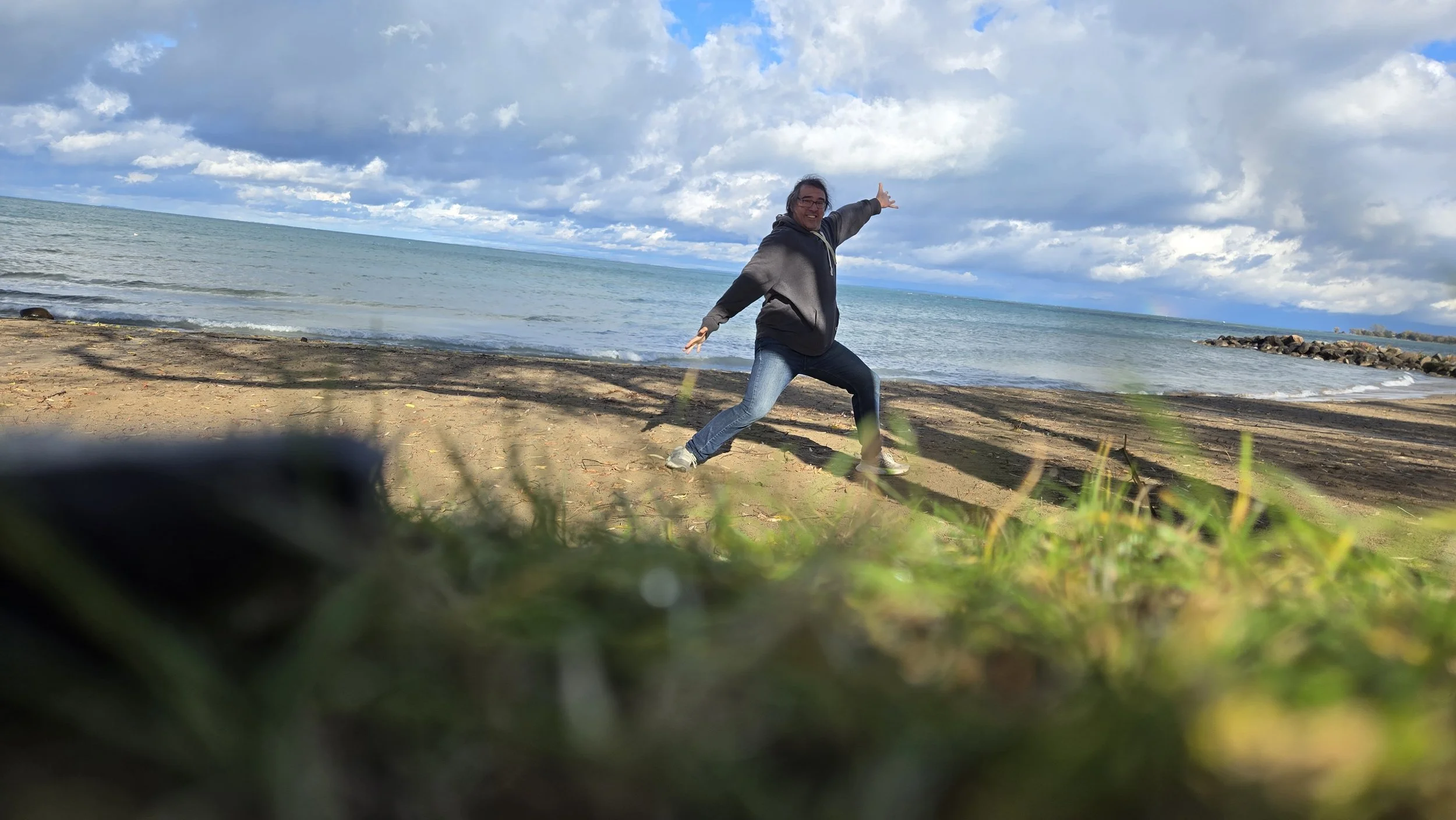
If your body had an experience points bar, how full would it be right now?
In almost every video game, the character you take control of starts at the bottom. No experience, no levels. Basic stats, basic gear, and one or two moves that barely scratch enemy armor. Just enough to get started and establish yourself in the world.
For those of us who play these games, we accept the starting circumstances. They give us something to work towards. A reason to adventure through sprawling landscapes, to become the hero of legend. Of course the character needs time in the field to grow. You grind those low-level mobs, get better gear, learn new skills, and take a few hits along the way. No one said it was going to be easy.
Now step out of the game world for a second. In real life, we face the same uphill battle, but we're constantly searching for shortcuts. We want all the stat upgrades with as little grind as possible. More strength, more energy, less pain, better health, but without the boring repetitions, without the effort, and definitely without sticking to a consistent schedule. Just point and click.
Imagine if we could build our bodies in a character creator before the adventure even starts. I always make my characters with broad shoulders and bigger muscles (including those glutes, haha!) because that's how I envision myself. Wouldn't that be great? But, if we want to create that desired look in real life, we have to put in the work.
I wanted to make this first blog about treating your training and your body like a character you actually care about. YOU are the player AND the character at the same time. If you want real progress, you have to press start on real work and take control.
How leveling works in games
If we strip it down, most progression systems follow a few basic steps. Things can get way more complicated, but at the foundation you have:
Experience and Levels
You fight enemies, clear quests, complete dungeons, and most of the time, new levels unlock better stats, new skills, fresh areas, and upgraded gear.
Skills
In role playing games (RPGs), massive multiplayer online role playing games (MMORPGs) and games that are similar, you're often given limited points to spend. You choose how to build your character. Become a tank that's impervious to damage, or maybe you want to be a glass cannon and cause mayhem. What if your team needs support, can you fill in that role? Maybe you just want to play it conservative and be all the above, either way the choice is yours.
Gear and Tools
Some games lean heavily on items. In the Legend of Zelda series, Link doesn't gain traditional stat increases, but each new tool changes how he (and you) interacts with the world and defines what you can do. While in other RPGs and MMORPGs, gear is everything. Weapons and armor can completely dictate how your character performs.
None of that happens by accident. The character will not commit to action until you take control. It is a video game after all.
You never expect a video game character to wake up with a full inventory and max stats. Well, except maybe for Samus in the Metroid games. She usually starts with a powered-up suit before some force strips away her gear, leaving her neck deep in an alien world with little else but a blaster. But even then, the journey is about regaining what was lost and getting stronger through effort.
How leveling works in real life
Real life isn’t flashy, the progression system is there but you need to pay a little more attention to it.
Your experience points
Every rep, every set, every session where you show up and do the work you gain points! Consistency is how you accumulate it. Miss a week, you don’t lose your progress entirely but the grind to the next level takes a little longer. Sure we face set-backs along the way but you can always get back to it! It just takes a little longer to get to your goal.
Your levels
These are the milestones you cross. That first unassisted push-up, your first 5K without stopping (running or walking), or even that first 135lb squat! Levels aren’t just about PRs either. Getting better sleep, feeling less joint pain, or climbing stairs. Everything just begins to feel easier and then you push for the next level.
Your skill tree
Just like building a character, you’re allocating points into different attributes:
Strength
Conditioning
Mobility
Technique
Recovery
Nutrition
etc.
When you make a choice to do something like, for instance, adding in an extra training session, prioritizing recovery or focusing on your technique/form, you’re ultimately allocating those points somewhere. You’re designing your build whether you realize it or not.
Your gear
Dumbbells, resistance bands, lifting belts, knee/elbow sleeves, or even the right pair of shoes can help you move beyond the plateau you’ve been stuck at for weeks or help train around an injury. But here’s the thing. The gear doesn’t do the work for you, it just opens the door. You still need to commit to taking those steps.
The boss fight
In games the stakes scream at you. One wrong move and you're dead.
In real life, the stakes are quiet. You get winded carrying groceries. Your back nags after a full day at a desk. Your knees complain every time you stand up. Long term, the real boss fights are blood pressure, blood sugar, and joint health just to name a few.
And just like in games, you can prepare for these fights and you can win in life!
My own training arc
There have been a couple times in my life when games literally helped me stay consistent with training and kept my mental health intact.
After rupturing a tendon in my finger, I spent six months away from normal lifting. I gained some weight, but I kept moving. Traditional workouts felt frustrating with an injured hand, so I leaned on the Wii and Wii U instead. Games that had you swinging, stepping, and punching at the screen kept me active when I could have checked out completely.
Later, during the pandemic, training virtually got stale real quick. I learned a few things about gamification and it helped structure my daily routines and daily tasks. The feeling of clearing the planned workouts kept me consistent when there was no gym atmosphere in my small apartment. I had to adjust on the fly using culligan water jugs, going out for a run when I could (despite the stay at home order), and using my resistance bands. Portable gym equipment was awfully expensive around this time.
These phases reminded me of something simple. Our bodies respond to repetition, effort, and time, just like a character in a game. Adding small variations to my routine kept it from feeling like a constant grind. Using game systems as a bridge made it easier to return to regular strength training once my hand healed and the world opened back up. More recently, I broke my forearm during my 2025 football season, but with those past experiences, I've become more resilient and found ways to keep training without major setbacks.
You might not use the same games or systems I did, and that's fine. What matters is that you start seeing yourself as a character you're responsible for leveling.
Every game needs a starting point. Time to make your own. If you need support do not hesitate to reach out. Until next time - 2P OUT!
